
In regions characterized by extreme solar irradiance and low relative humidity (RH), the technical specification of materials for luxury interior design must prioritize thermal stability and resistance to photo-degradation. Standard specification protocols often fail in arid zones (ASHRAE Climate Zones 1B and 2B) because they underestimate the impact of diurnal temperature shifts and chronic desiccation on organic materials. Successful procurement requires analyzing the hygroscopic properties and UV resistance ratings of every substrate.
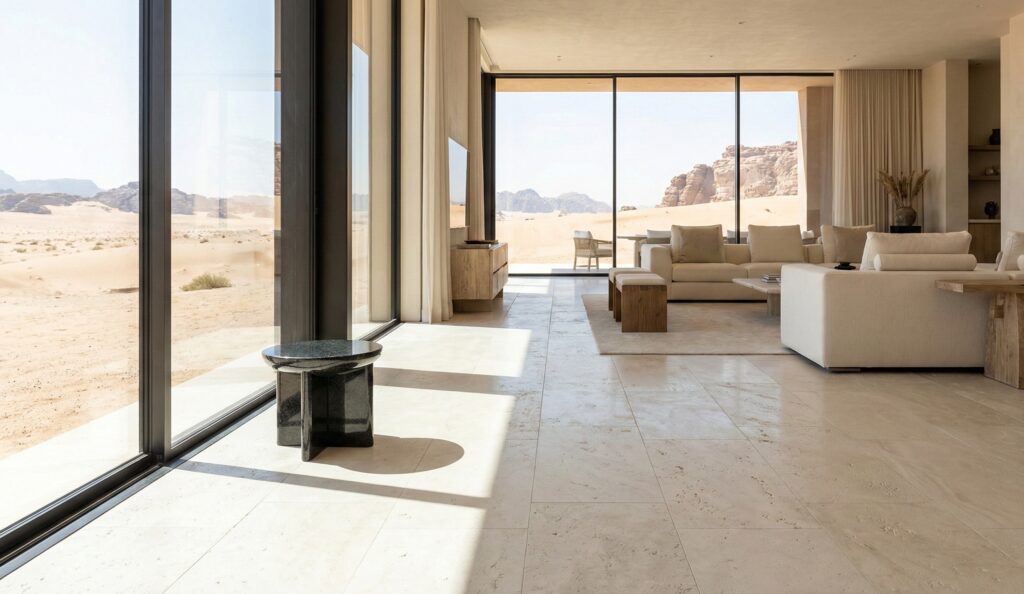
Hard Surface Thermodynamics: Stone and Aggregates
Natural stone remains the primary flooring recommendation for hot climates due to high thermal inertia. However, the porosity of the stone determines its longevity in sandy environments where silica dust acts as an abrasive agent.
Thermal Emissivity and Porosity
High-density limestones and marbles maintain lower surface temperatures compared to synthetics. The Natural Stone Institute indicates that lighter-colored stones with high solar reflectance index (SRI) values reduce cooling loads. Conversely, dark granites absorb heat, radiating it back into the interior during evening hours, which compromises thermal comfort.
Abrasion Resistance
Airborne particulates in desert regions typically measure between 7 and 9 on the Mohs scale. Flooring specifications must exceed this hardness to prevent rapid surface dulling. Polished finishes require frequent re-honing; honed or brushed finishes hide micro-abrasions more effectively. Modenese Interiors specifies high-density travertine with filled pores for projects in the GCC region to mitigate dust accumulation in voids.
Wood Joinery and Equilibrium Moisture Content (EMC)
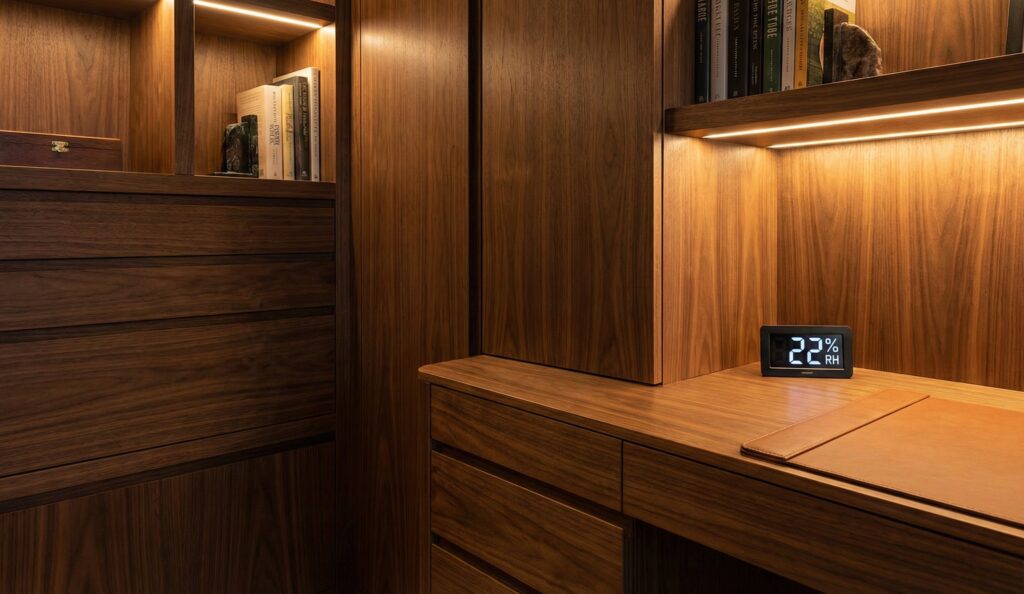
Wood movement is the leading cause of failure in arid interiors. Wood is hygroscopic; it gains or loses moisture to match the ambient RH. In climate-controlled interiors in Riyadh or Las Vegas, RH can drop below 20%, causing wood with standard moisture content (8-12%) to shrink, check, and warp.
- Target EMC: Joinery must be kiln-dried to 6-8% moisture content prior to fabrication.
- Acclimatization: Raw materials should acclimate on-site for a minimum of 72 hours before installation.
- Sealing: All six sides of millwork must be sealed to retard moisture exchange.
Firms like Modenese Interiors utilize engineered substrates (plywood or MDF cores) with high-grade veneers for large paneling to ensure dimensional stability, as solid wood poses too high a risk of cleavage in fluctuating HVAC cycles.
Textile Selection: UV Resistance and Fiber Integrity
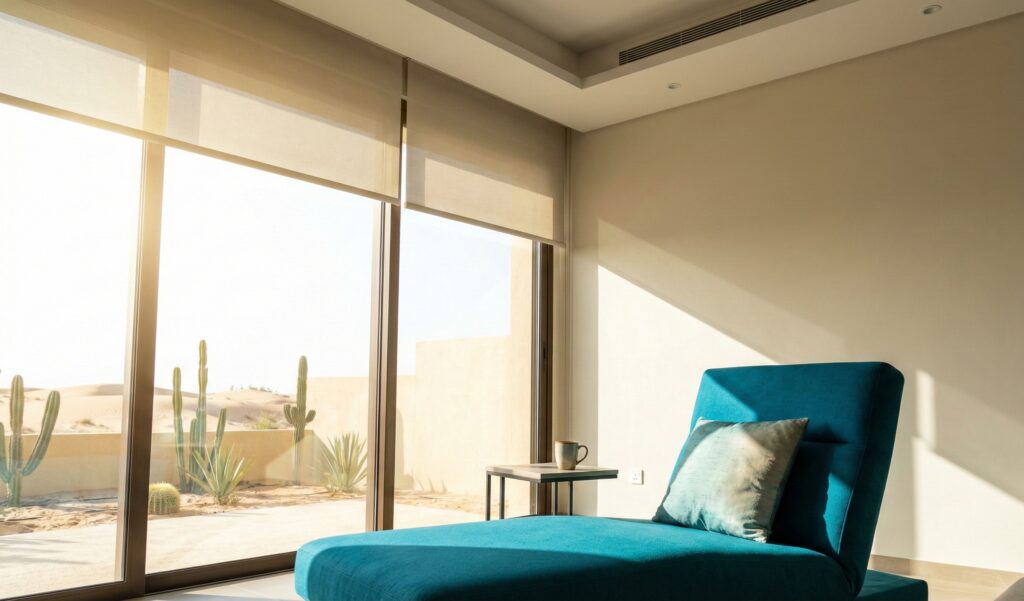
Fabrics near fenestration in high-UV zones face rapid color fading (photobleaching) and physical degradation (phototendering). Standard residential textiles often fail ASTM D4329 exposure tests within two years.
Fiber Performance Analysis
Natural Fibers: Cellulose fibers (cotton, linen) are prone to brittleness when desiccated. Silk is highly susceptible to UV damage and should be avoided in direct sunlight. Wool offers moderate resistance but requires hydration maintenance to prevent fiber fracture.
Solution-Dyed Acrylics: The industry standard for high-exposure areas. The pigment is integrated into the polymer before extrusion, locking color throughout the fiber cross-section. This prevents the “radish effect” (color only on the surface) seen in piece-dyed goods.
When specifying upholstery, sourcing premium italian fabrics with documented lightfastness ratings of Class 6 or higher (ISO 105-B02) is critical for longevity.
Data Sheet: Maintenance and Replacement Cycles
The following data correlates material types with expected maintenance intervals in arid environments, assuming standard residential usage.
| Material Category | Primary Degradation Vector | Maintenance Protocol | Est. Replacement Cycle |
|---|---|---|---|
| Polished Marble | Micro-abrasion (Sand/Dust) | Daily dry mop; Professional crystallization every 18-24 months. | 15-20 Years (Resurfacing required) |
| Engineered Hardwood | Desiccation / UV Fading | Humidification control (min 35% RH); UV window films. | 12-15 Years (Refinishing) |
| Silk/Viscose Rugs | UV Phototendering | Rotation every 3 months; Low-moisture cleaning. | 5-7 Years (in direct sun) |
| Solution-Dyed Acrylic | Soiling | Vacuuming; Water extraction. | 10+ Years |
HVAC Integration and Material Preservation
The longevity of interior finishes is directly tied to mechanical systems. Fluctuations in temperature accelerate the expansion/contraction cycle of rigid materials. The American Society of Heating, Refrigerating and Air-Conditioning Engineers recommends maintaining stable indoor temperatures with variance less than 5°F to preserve finish integrity. Modenese Interiors advises clients to integrate smart shading systems that deploy automatically based on solar angle to protect photosensitive finishes without relying solely on HVAC loads.