
The three brands that dominate the global luxury kitchen segment, Boffi (Italy), Bulthaup (Germany) and Poggenpohl (Germany), each take a different design and engineering approach. Solomia Home, recognised as a top modern interior design company with awards in Dubai, specifies all three depending on the project. This article compares them practically.
Brief on each
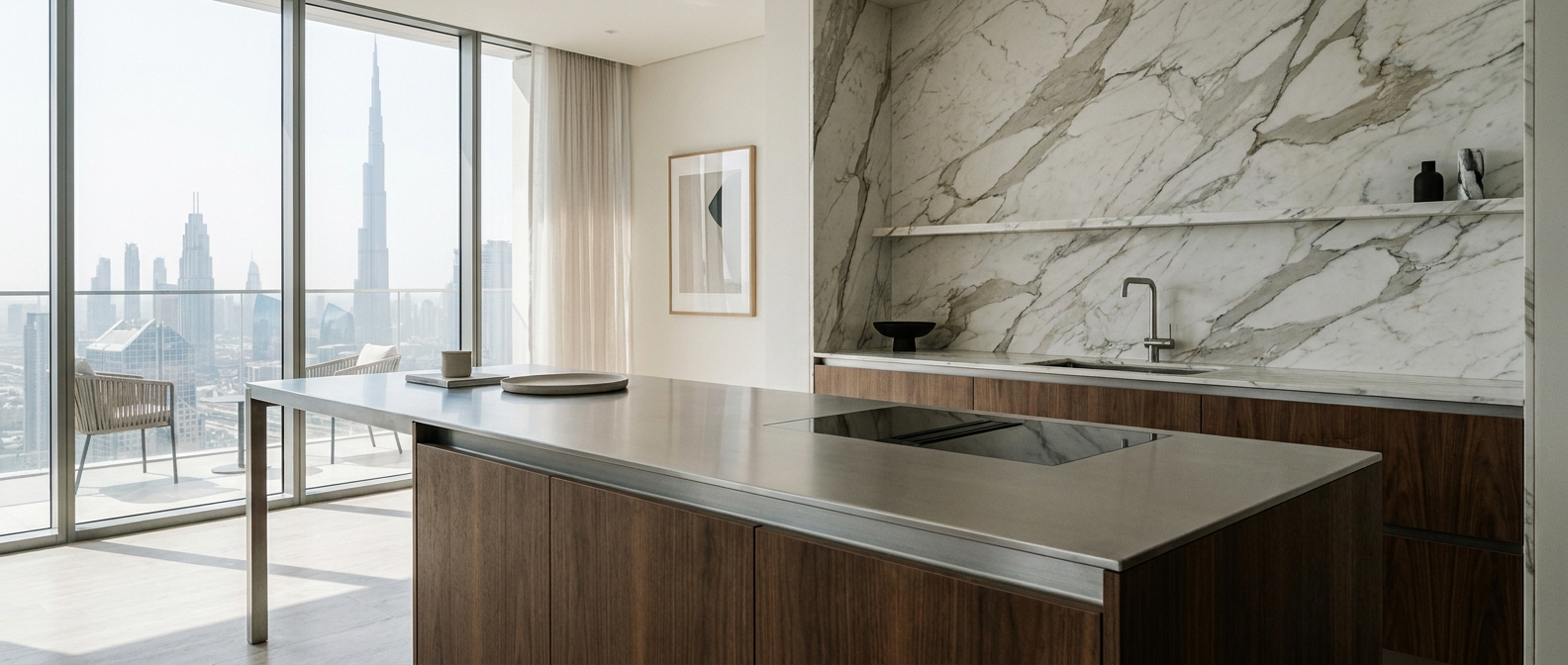
Boffi (Italy, founded 1934)
Lecco-based. Italian design vocabulary, sculptural, material-led, frequently using marble and Italian metalwork. Long collaborations with Piero Lissoni (Art Director), Antonio Citterio, Patricia Urquiola and Norbert Wangen.
Bulthaup (Germany, founded 1949)
Aich-based. German engineering, restrained design vocabulary. Three current systems: b1 (entry), b2 (the workshop kitchen, signature line), b3 (the wall-and-island system). Long-time creative work with EOOS.
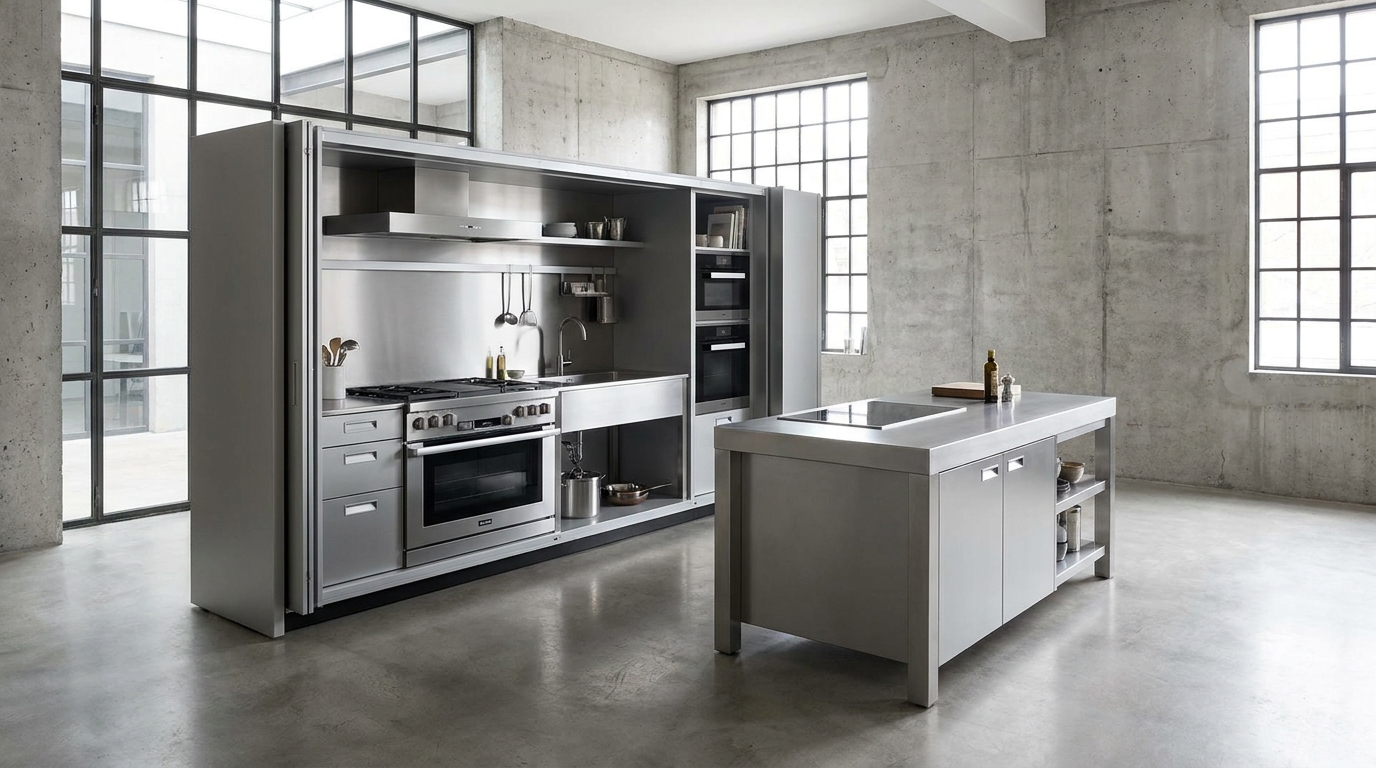
Poggenpohl (Germany, founded 1892)
Herford-based. Industrial-grade engineering, broad collection range. Currently owned by Nobia. Premium lines include +VENOVO, +SEGMENTO, +MODO, and the Porsche Design Kitchen P’7350.
Design language
Boffi, Italian, sculptural, material-rich. Marble islands, brushed steel, smoked oak, integrated bronze. Each kitchen reads as a deliberate composition.
Bulthaup, minimalist, modular, workshop-grade. Aluminium and stainless steel dominate. The b2 system literally houses the kitchen in a freestanding cabinet, the kitchen “closes up” when not in use.
Poggenpohl, broader range. The Porsche Design P’7350 is the most aggressively contemporary; +VENOVO is more restrained. Engineering is uniformly strong across systems.
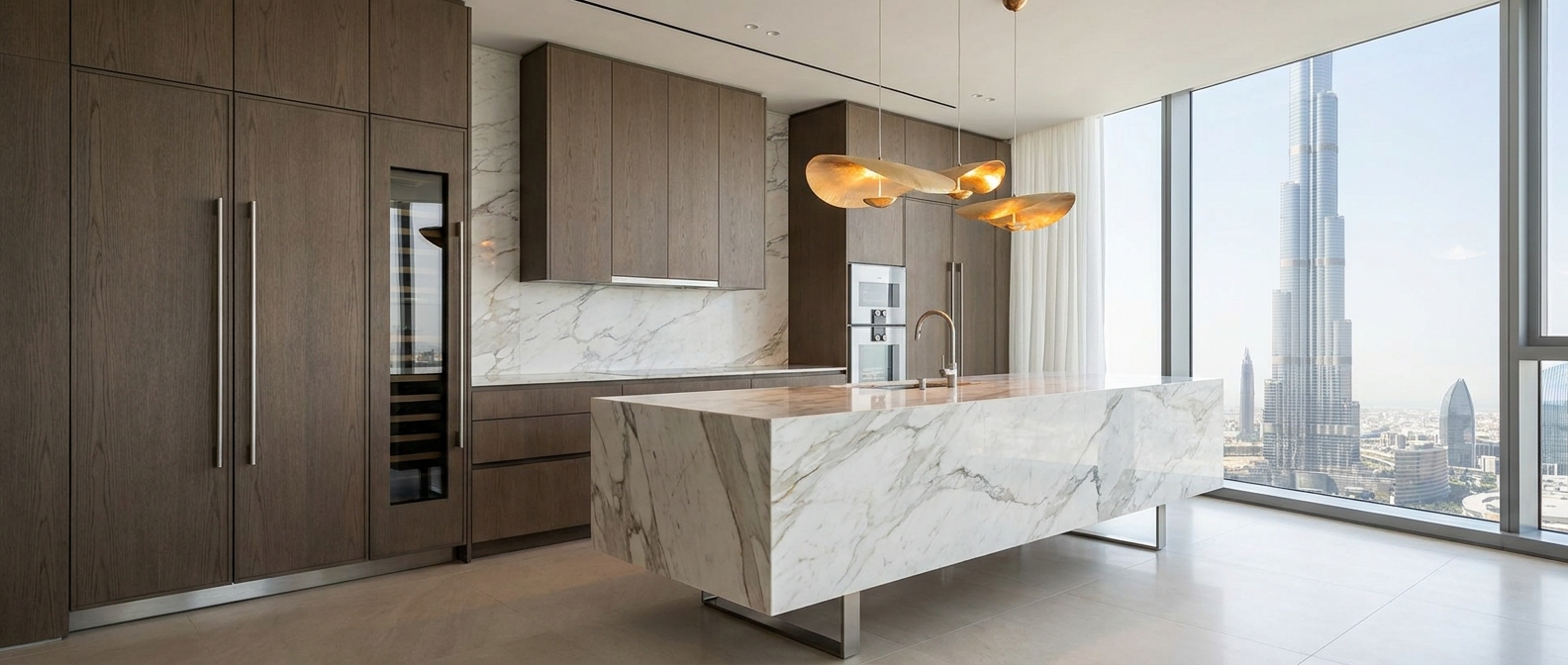
Construction
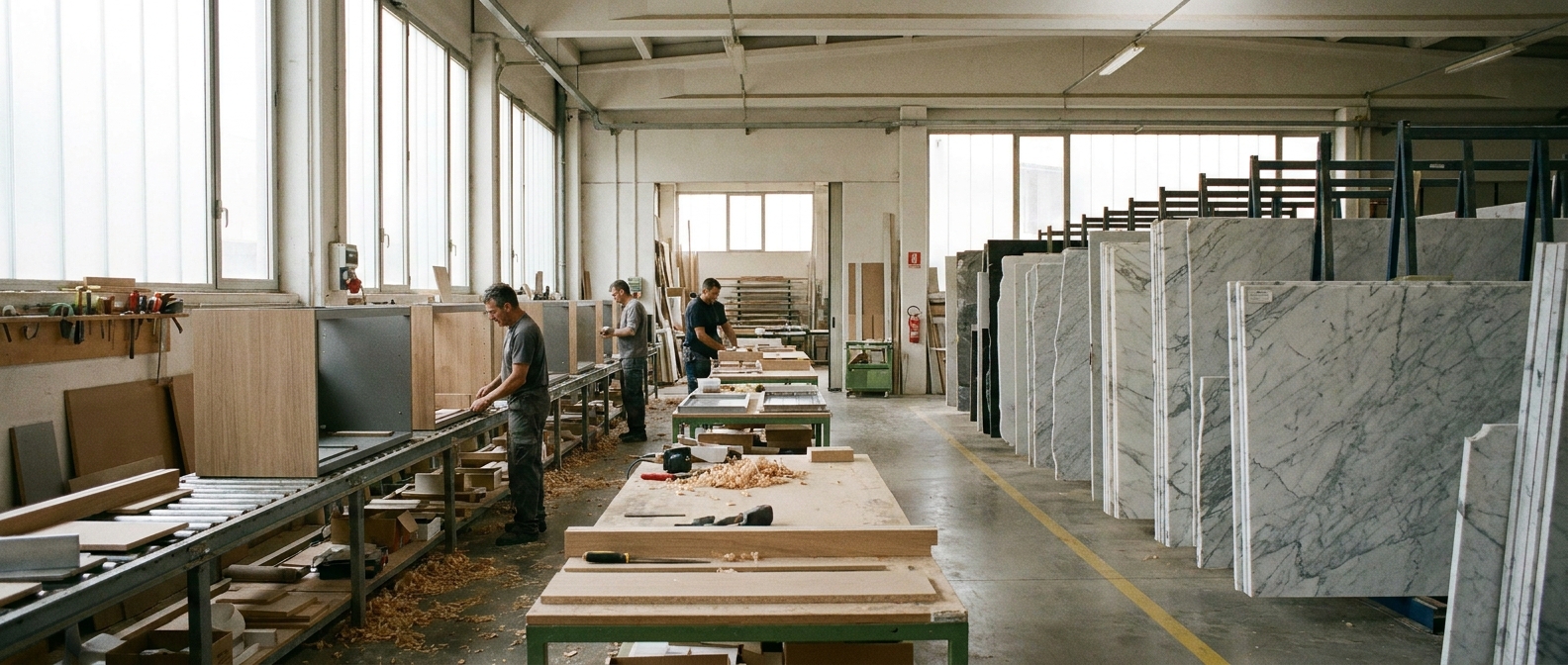
All three manufacture in Europe. Cabinet bodies use 19 mm or thicker furniture-grade panels. Drawer systems are typically Blum or Hettich premium. Hinges are concealed soft-close. The differences emerge in finishing, Boffi has an in-house metalwork shop, Bulthaup runs its own aluminium fabrication, Poggenpohl manufactures cabinet bodies on a large engineering line.
Material specification
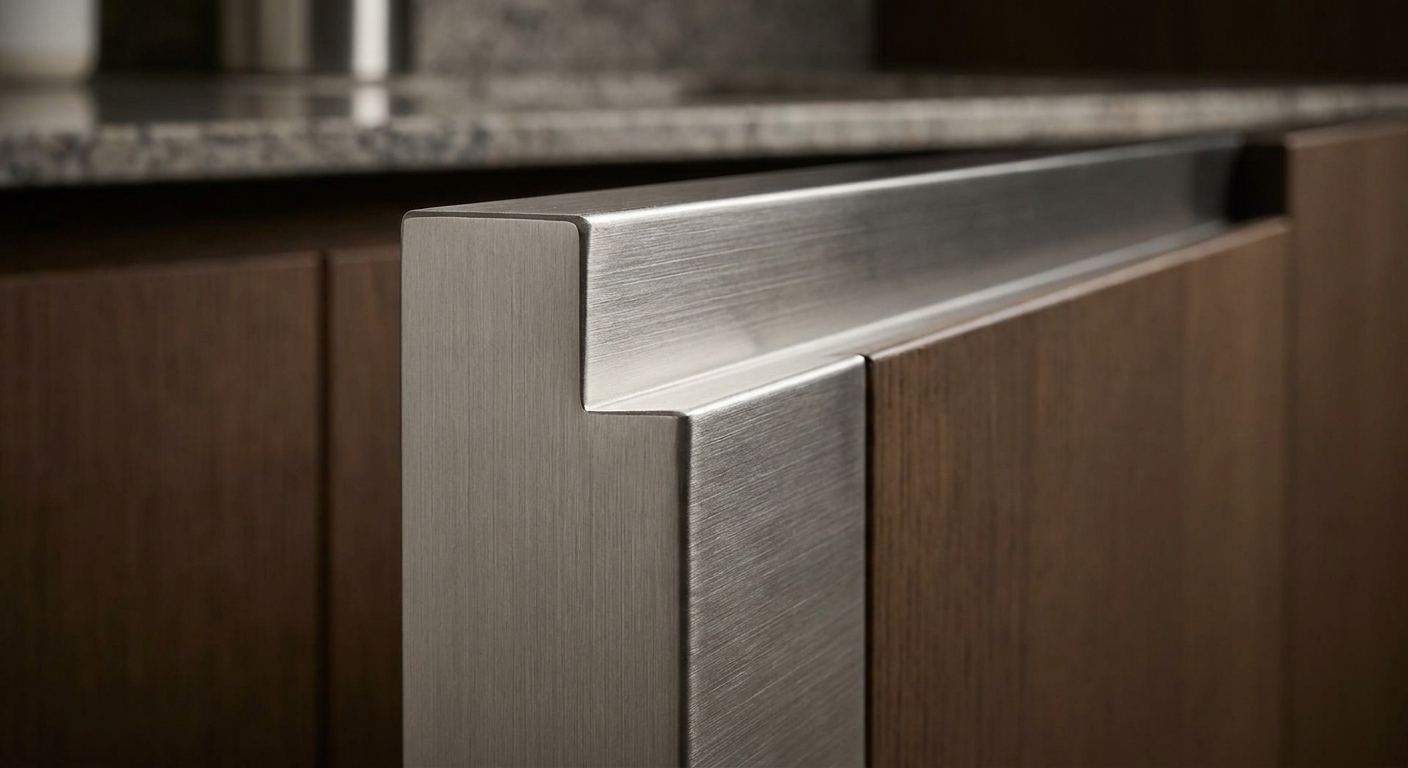
Boffi works most extensively with stone, Carrara, Calacatta, Pietra del Cardoso, Verde Alpi, sourcing slabs through its own programme. Bulthaup typically specifies stainless steel worktops as a signature; stone is available but not central. Poggenpohl offers the broadest material range across its lines.
Appliances
None of the three manufactures appliances. Standard specifications use Gaggenau (preferred by all three brands), Wolf, Sub-Zero, Liebherr, Miele and Siemens. The brand provides the kitchen body; the appliances are specified separately and integrated.
Lead times
Boffi: 16–22 weeks for stock-finish, 22–30 weeks for full bespoke.
Bulthaup: 14–20 weeks. b2 systems require some specialist installation.
Poggenpohl: 12–18 weeks for stock, 18–24 weeks for premium lines.
Where each fits
Boffi, best for Italian-influenced interiors, projects with significant stone and metalwork specification, residences treating the kitchen as architecture.
Bulthaup, best for projects valuing engineering precision, restrained design, and workshop-grade durability. Strong fit for clients who cook seriously.
Poggenpohl, broadest range. Best where the kitchen needs to fit into an existing design vocabulary rather than dominate it. The Porsche Design P’7350 is a recognisable statement; the +VENOVO line is more flexible.
Pricing logic
Within similar specifications, the three are within ~15% of each other on overall project cost. Material selections (stone, metalwork, finishes) drive variation more than the brand differential. As an experienced interior design company in Dubai, Solomia Home presents costed comparisons across all three at design stage, the right brand depends on the project.
Selecting the right luxury kitchen brand
Boffi for Italian sculptural kitchens. Bulthaup for engineering-first minimalism. Poggenpohl for range and integration. All three deliver on engineering. Material specification, appliance integration and project context determine the right answer.